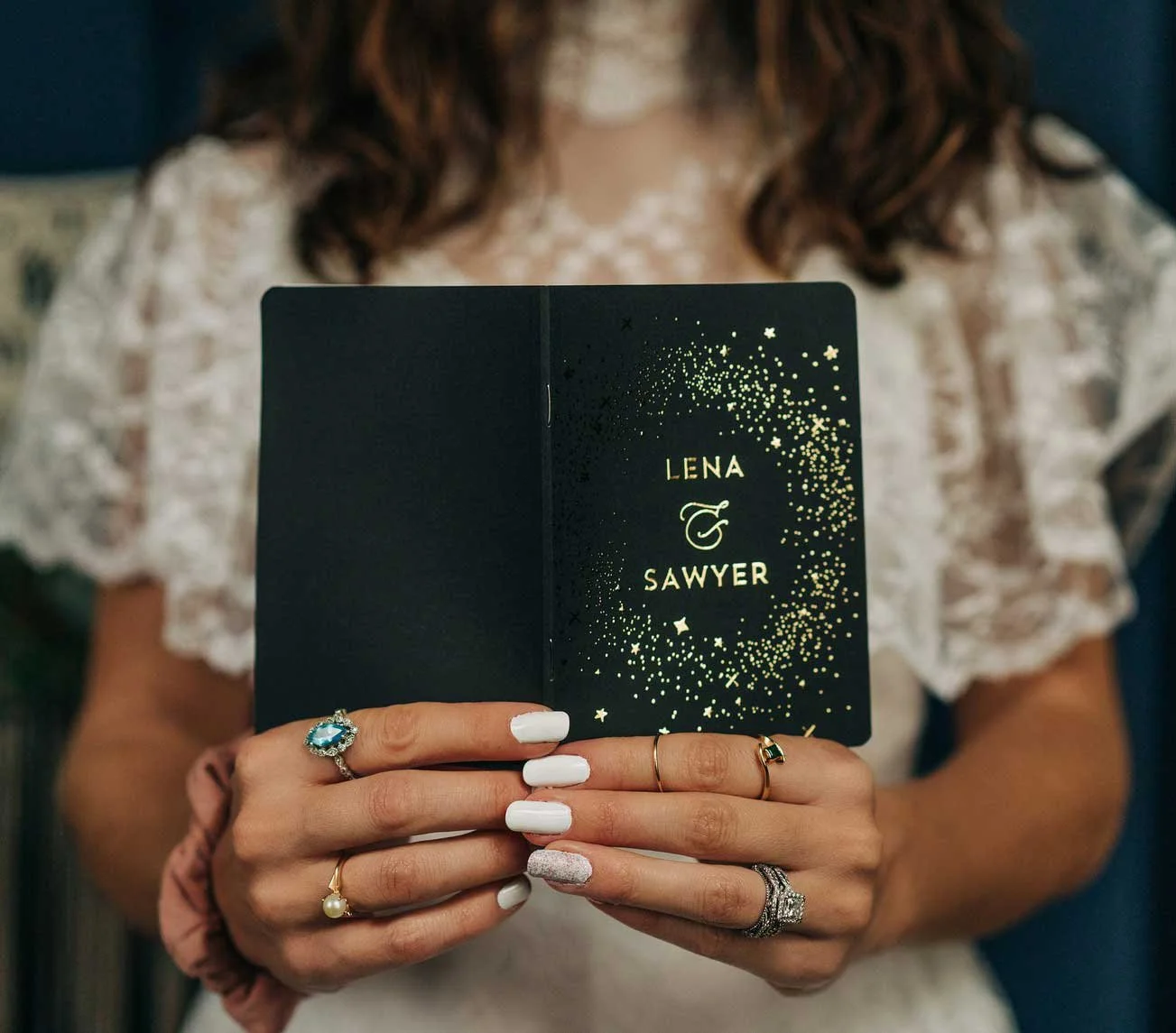
Wedding invitations and vow books represent two essential elements of wedding celebrations, each serving distinct but complementary purposes. Invitations announce upcoming nuptials to invited guests, while vow books preserve the sacred promises couples make during ceremonies. Understanding these items’ roles, designs, and significance helps couples create cohesive wedding experiences where every detail reflects their commitment and celebrates their unions.
The Significance of Wedding Invitations
Wedding invitations represent the formal introduction to celebrations, communicating event details while establishing tone and expectations. These carefully crafted communications inform guests about ceremony timing, reception locations, attire requirements, and logistical information necessary for attendance. Well-designed invitations create anticipation for upcoming celebrations while providing practical information guests need.
Invitations serve as historical records of special occasions. Guests preserve quality invitations as mementos of significant moments in couples’ lives and their own experiences. Years later, couples and guests discover saved invitations, remembering celebrations and reconnecting with the emotions surrounding wedding days. Quality invitations become treasured keepsakes lasting lifetime.
Invitations communicate couple style and wedding aesthetic before ceremonies begin. Design elements, color choices, font selections, and wording reflect couple personality and celebration vision. Guests forming initial impressions from invitations develop expectations about wedding formality, decoration style, and overall celebration atmosphere. Thoughtfully designed invitations prepare guests emotionally for experiences awaiting them.
The Purpose of Wedding Vow Books
Wedding vow books preserve the sacred promises couples exchange during ceremonies. These special volumes capture the words couples speak, the emotions they express, and the commitments they make to one another. Vow books transform spoken promises into permanent written records guests and couples can reference throughout their lives together.
Vow books commemorate the specific words and sentiments couples express during their most significant personal moments. Rather than relying on memory or hoping someone recorded the ceremony, couples preserve their own words creating lasting personal records. Future generations may read vow books understanding ancestors’ commitment languages and relationship foundations.
Vow books provide keepsakes couples treasure throughout their marriages. On anniversaries or during difficult times, couples return to vow books remembering promises they made and commitments they share. Rereading vows reconnects couples with the emotions and dedication they felt on wedding days, strengthening bonds and reminding them why they chose one another.
How Invitations and Vow Books Work Together
Wedding invitations and vow books create comprehensive wedding documentation. Invitations record who attended and when celebrations occurred, while vow books preserve what couples promised one another. Together, these items create complete records of wedding days marking significant life transitions.
Coordinated designs for invitations and vow books create visual cohesion throughout weddings. Matching color schemes, fonts, and design elements connect these items thematically. Couples using consistent aesthetics across invitations and vow books create professional appearances where every detail reflects thoughtful planning and attention to design.
Invitations bring guests into wedding celebrations while vow books memorialize couple commitments. Invitations represent external communications welcoming others, while vow books document intimate promises between partners. These contrasting purposes complement one another creating full wedding experiences honoring relationships with both community and personal significance.
Designing Wedding Invitations
Wedding invitations require careful design consideration balancing aesthetics with practical information requirements. Invitations must include essential details while reflecting wedding style and couple personality. Design elements including fonts, colors, paper quality, and layouts significantly influence guest reactions and celebration preparation.
Formal invitations typically feature elegant designs with traditional elements like script fonts, embossed lettering, or refined color palettes. Casual invitations employ contemporary designs with bold fonts, colorful graphics, or creative layouts reflecting relaxed celebration atmospheres. Invitation designs should authentically reflect couple styles rather than forcing aesthetics feeling inauthentic.
Quality paper choices enhance invitation impact. Heavy cardstock, textured papers, or specialty finishes communicate investment and importance. Guests receiving premium invitations perceive events as significant and special. Budget considerations affect design possibilities, but quality materials need not require excessive spending.
Selecting and Designing Vow Books
Wedding vow books range from simple blank journals where couples write vows to elaborate custom-designed volumes. Couples may select pre-made vow books with prompts guiding promise composition or create personalized books reflecting their relationships. Design options accommodate various preferences and budgets.
Vow book materials influence their lasting quality and emotional impact. Premium leather covers, quality paper, and embossed details create heirloom-quality volumes couples treasure. Simple vow books serve equally important functions preserving couple promises regardless of material expense.
Personalization options allow couples expressing their unique relationships through vow books. Custom embossing with couple names or wedding dates, selecting meaningful quotes, or incorporating significant colors personalize vow books. Personalized vow books become more meaningful than generic alternatives, connecting items directly to specific couples and celebrations.
Coordination and Display
Coordinating vow books with wedding invitations creates visual harmony in wedding stationery. Couples may use invitation design elements in vow book design, selecting matching colors or incorporating similar motifs. Coordinated stationery creates professional appearance demonstrating thoughtful planning.
Some couples display vow books during receptions, allowing guests to read promises couples made. Displayed vow books spark conversations about commitment and relationships, sharing intimate promises with community. Others prefer keeping vow books private, preserving sacred promises for couple eyes alone. Personal preference guides whether vow books receive public or private treatment.
Creating Lasting Memories
Wedding invitations and vow books work together creating comprehensive records of wedding days. Invitations document celebrations’ practical aspects while vow books preserve emotional and spiritual commitments. Together, these items create lasting documentation of significant life events.
Couples preserving quality invitations and vow books create resources for reflecting on relationships throughout their lives. Anniversary celebrations often involve reviewing these items, reconnecting with initial promises and celebrating sustained commitments. Children and grandchildren may eventually read invitations and vow books understanding ancestors’ values and relationship foundations.
Conclusion
Wedding invitations and vow books represent essential wedding elements serving distinct but complementary purposes. Invitations welcome guests and establish celebration tone while vow books preserve sacred couple promises. Thoughtfully designed invitations and vow books reflect couple commitment and create lasting mementos guests and couples treasure throughout their lives. Couples investing care in both items commemorate not only wedding celebrations but also the relationships and commitments defining their unions.
